
Screen Printing vs DTG vs DTF: Which Is Best for T-Shirts?

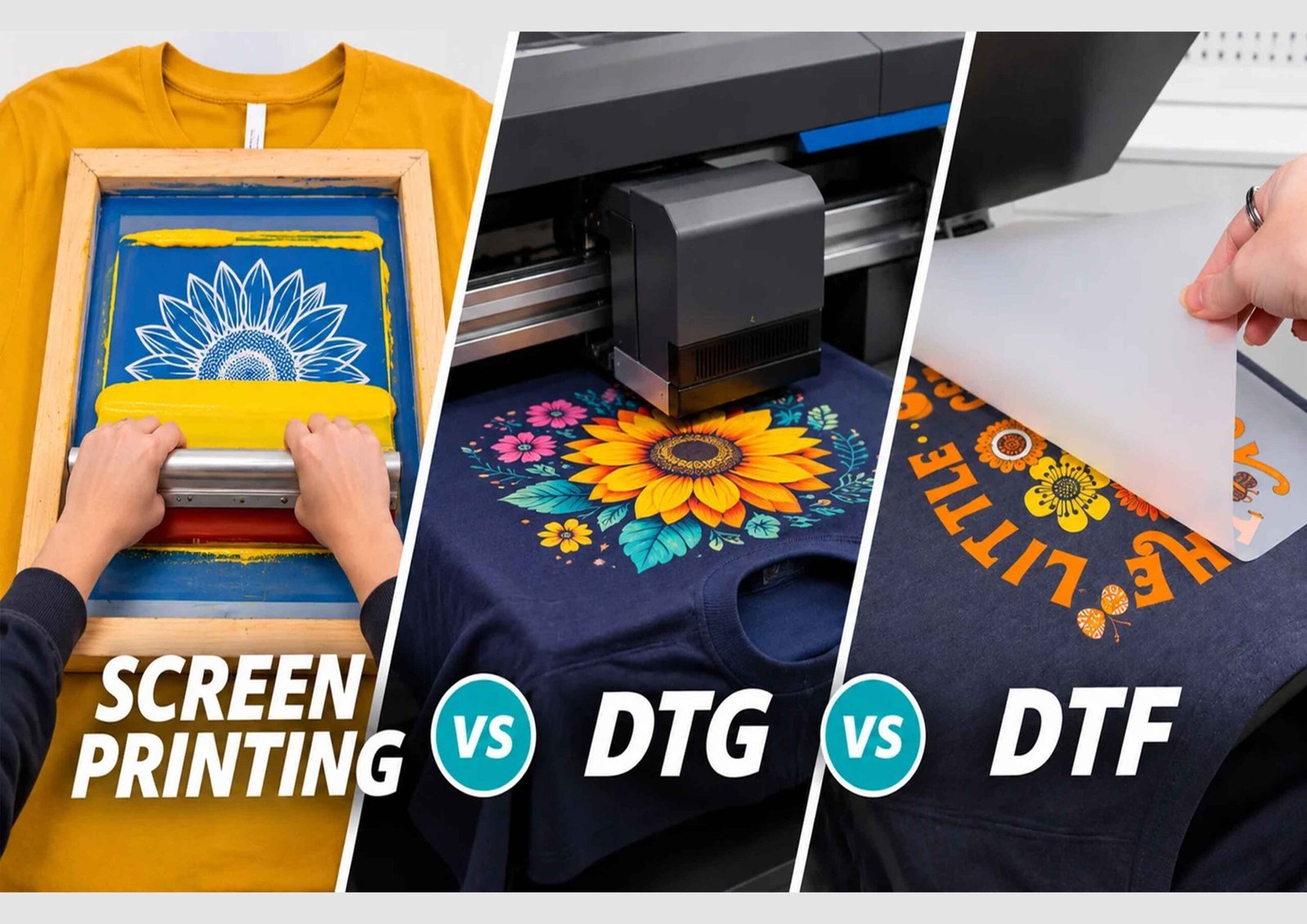
Screen Printing vs DTG vs DTF: Which Is Best for T-Shirts?
Have you ever bought a printed T-shirt and wondered how its design was created? Some shirts feature bold graphics, while others display detailed illustrations or colorful photographs. The printing method behind each design can make a noticeable difference.
If you enjoy printed clothing, understanding screen printing vs DTG vs DTF can help you make better choices. These three printing methods are popular for different reasons, and each offers unique advantages. However, choosing the right one can feel confusing when you are unfamiliar with the process.
Perhaps you want a T-shirt with vibrant artwork, a comfortable print, or a design that lasts through regular washing. You might also be comparing custom printing options for personal use or a clothing business.
The good news is that you do not need technical knowledge to understand the basics. Once you know how these methods work, you can compare their quality, cost, fabric compatibility, and durability more confidently. Let’s explore the differences and discover what makes each printing technique suitable for different needs.
What Is Screen Printing?
Screen printing is a traditional technique that transfers ink onto fabric through a mesh screen. A stencil blocks selected areas, allowing ink to pass through only the openings that form the design.
The process starts with artwork preparation and screen creation. The printer then places the screen over the garment and uses a squeegee to push ink through the mesh.
Screen printing is particularly popular for bold graphics, logos, lettering, and designs produced in larger quantities. Once the screens are prepared, the same artwork can be reproduced across many T-shirts.
Benefits of Screen Printing
Screen printing offers several advantages when the design and production requirements suit the method.
Vibrant colors: Suitable inks can produce bold, eye-catching designs.
Repeatability: The same design can be reproduced across a batch of garments.
Special finishes: Certain ink systems create textured, metallic, or other distinctive effects.
Good durability: Properly printed and cured designs can withstand regular wear and washing.
However, screen preparation requires time and effort. Each additional color may require another screen or a more complex setup.
This can make screen printing less practical for individual shirts or designs that change frequently. For larger batches featuring the same artwork, however, it can be an efficient choice.
What Is DTG Printing?
DTG stands for direct-to-garment printing. This method uses a specialized printer to apply ink directly onto a T-shirt, following digital artwork.
Think of it as printing an image on paper, except the printing surface is fabric. The printer places ink according to the design, allowing it to reproduce detailed illustrations and many colors.
DTG printing is often suitable for small orders because it does not require traditional screen preparation. You can also change the artwork between garments without creating a new set of screens.
Benefits of DTG Printing
DTG offers flexibility when your design contains intricate details or several colors.
Detailed artwork: It can reproduce illustrations, photographs, and complex color variations.
Small orders: Individual shirts and short production runs are practical applications.
Design flexibility: Different garments can feature different digital designs.
Potentially soft prints: Suitable ink application can produce a comfortable print feel.
There are some limitations to consider. DTG performance depends on the printer, ink system, garment, and preparation process.
Cotton and cotton-rich fabrics are commonly used, although compatibility varies by equipment. Dark garments may require pretreatment and a white ink underbase.
If you want one shirt featuring detailed artwork, DTG may be a suitable option. Always check the garment specifications and request a sample when print quality matters.
What Is DTF Printing?
DTF stands for direct-to-film printing. Unlike DTG, this method transfers a design from a specially prepared film onto the garment.
First, the artwork is printed onto the film using compatible inks. An adhesive powder is then applied and processed according to the printing system’s requirements.
The prepared transfer is applied to the garment using a heat press. Correct temperature, pressure, and timing help the design adhere properly.
Benefits of DTF Printing
DTF is popular because it can accommodate colorful artwork and a variety of compatible fabrics.
Fabric flexibility: It can work with cotton, polyester, and blends when the materials and transfer system are compatible.
Detailed designs: Digital printing supports intricate graphics and multiple colors.
Transfer storage: Prepared transfers can be stored and applied later according to manufacturer guidelines.
Useful for varied garments: It can decorate different garment types without printing directly onto each fabric.
One consideration is the print’s texture. DTF designs often feel like a distinct layer on the garment, especially when the artwork covers a large area.
The final feel and durability depend on the transfer materials, design coverage, application settings, and garment care. Proper application is essential for achieving a reliable result.
Screen Printing vs DTG vs DTF: Key Differences
Although all three methods create printed designs, their processes and ideal uses differ.
| Feature | Screen Printing | DTG Printing | DTF Printing |
|---|---|---|---|
| Process | Ink passes through a mesh screen | Ink prints directly onto fabric | Artwork transfers from film |
| Best suited for | Medium and large batches | Individual shirts and small runs | Varied garments and small runs |
| Detailed photographs | Possible with suitable preparation | Particularly suitable | Particularly suitable |
| Fabric compatibility | Depends on ink and fabric | Often favors suitable cotton garments | Works with many compatible fabrics |
| Setup | Requires screen preparation | Requires digital setup and garment preparation | Requires film and transfer preparation |
| Print feel | Varies by ink and coverage | Can feel soft on suitable garments | Often feels like a surface layer |
| Color handling | Often uses separate color layers | Digital color printing | Digital color printing |
| Cost considerations | Setup costs matter for small orders | Often practical for short runs | Depends on transfer and application costs |
These are general comparisons rather than guarantees. Equipment, artwork, materials, and printing expertise can influence the final result.
Which Method Produces the Best Print Quality?
There is no single winner for every design. Your preferred appearance and the artwork itself should guide your decision.
Screen printing works well for bold graphics, solid colors, and designs that need consistent reproduction across many shirts. DTG is particularly useful for photographs, detailed illustrations, and complex color gradients.
DTF also handles colorful, detailed designs and offers flexibility across compatible fabrics. However, its transferred surface may feel different from a direct print.
Before choosing, consider these questions:
Does your design contain photographs or intricate details?
Do you prefer a softer print or a more noticeable surface?
Will the design appear on light or dark fabric?
Do you need the same artwork on many garments?
Requesting a sample is one of the easiest ways to compare appearance and texture before making a decision.
Which T-Shirt Printing Method Is More Affordable?
The most affordable method depends on order quantity, artwork, materials, and production requirements.
Screen printing involves initial setup costs. However, those costs can be spread across many garments, potentially reducing the cost per shirt in larger batches.
DTG can be practical for small orders because it avoids traditional screen preparation. However, garment preparation, equipment costs, and maintenance still affect the final price.
DTF costs depend on film, adhesive, ink, equipment, and transfer application. Producing transfers in batches may help streamline certain workflows.
Before comparing quotes, consider the complete cost rather than the printing price alone.
Include garment quality, setup, artwork preparation, printing, finishing, and any additional handling. This gives you a more realistic comparison.
How to Choose the Right Printing Method
Choosing between screen printing, DTG, and DTF becomes easier when you start with your needs.
Choose Screen Printing for Larger Batches
Screen printing is worth considering when you need many shirts featuring the same design. It is particularly useful for events, team apparel, merchandise, and bold graphic designs.
Choose DTG for Detailed, Small-Run Designs
DTG may suit you when you need just a few shirts or want to reproduce complex artwork. It offers flexibility for personalized designs and small collections.
Choose DTF for Flexible Garment Applications
DTF may be appropriate when you want colorful transfers applied to different compatible garments. It can be useful when transfer preparation and garment production need to happen separately.
Consider Comfort and Durability
Your printing method is only one part of the final result. Fabric quality, ink compatibility, print coverage, curing, and application all matter.
For everyday clothing, consider how the garment feels, how you plan to wear it, and how easily you can care for it. A well-chosen method should suit both the design and the garment’s intended use.
How to Care for Printed T-Shirts
Proper care helps you enjoy your printed apparel for longer. However, the best approach depends on the garment, ink, and transfer materials.
Follow the garment’s care label and any specific instructions supplied by the printer. When appropriate, these simple habits can help reduce unnecessary wear:
Turn the T-shirt inside out before washing.
Use a suitable washing cycle and detergent.
Avoid excessive heat when washing or drying.
Follow the recommended ironing instructions.
Avoid ironing directly over printed areas unless the care instructions permit it.
Do not assume every printed T-shirt needs identical care. Screen-printed, DTG, and DTF designs use different materials and processes.
If you are buying a new printed garment, check its care instructions before washing. These small steps can help preserve the fabric and the design’s appearance.
Exploring Printed Apparel with Rijb – Hand Printed Apparel
Printed T-shirts are more than everyday clothing. They offer a way to express your interests, discover creative designs, and add personality to your wardrobe.
When exploring apparel from Rijb – Hand Printed Apparel, consider the design, garment material, print appearance, and care instructions. Understanding how printing methods differ can help you ask better questions and choose clothing that suits your preferences.
It is also useful to distinguish hand-printed designs from digitally produced transfers or direct printing. The actual production method depends on how each garment is made, so check the product information rather than assuming a particular technique.
Instead of focusing only on appearance, think about comfort, intended use, and long-term care. These details can help you make a more informed choice when exploring printed clothing.
Conclusion
Screen printing, DTG, and DTF each offer practical ways to create distinctive T-shirt designs. Screen printing often suits larger batches, DTG works well for detailed artwork and small orders, while DTF offers flexibility across compatible fabrics.
Your ideal option depends on design complexity, order quantity, fabric, budget, and preferred print feel. Understanding these differences helps you make informed decisions without getting lost in technical details.
When exploring printed apparel, remember to consider garment quality and care instructions alongside the printing method. A good-looking design is only one part of a satisfying clothing choice.
Whether you’re choosing a personalized gift or refreshing your everyday wardrobe, a little knowledge goes a long way. Explore different designs, compare your options, and find printed apparel that suits your personal style.
Read Related Articles
• Why a Printed Tshirt Still Defines Creative Streetwear Culture
• Custom Tshirt Print For Brands: How To Get Prints That Last


